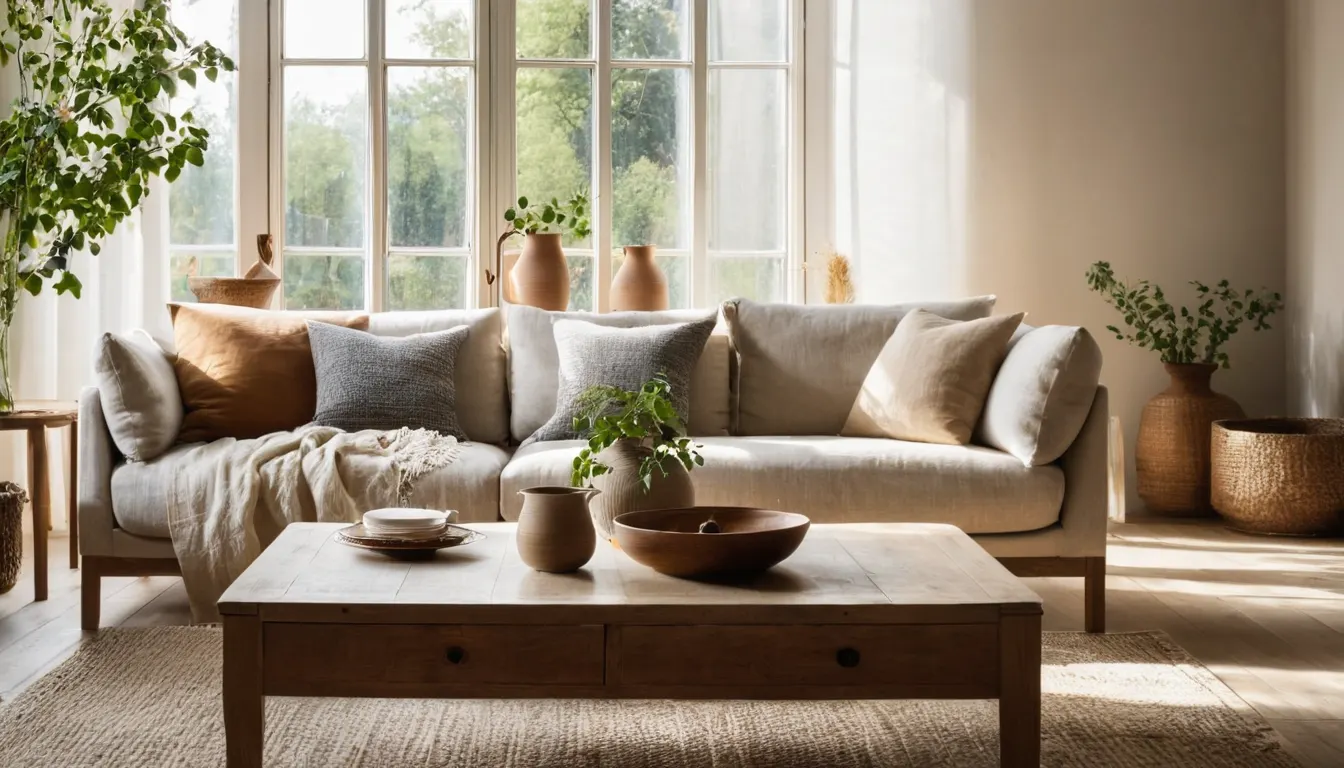
Idea boards, room by room
Each board pairs a small palette with a handful of ideas. The colour strip is weighted roughly 60-30-10, the split explained in the colour guide: the widest block is the walls and large surfaces, the next is furniture and textiles, the narrow ones are accents.
Living
Living room: soft sage
Pale sage walls · Linen upholstery · Walnut wood · Charcoal accents
- Pull the sofa a hand-width off the wall so the room breathes.
- Choose a rug large enough for the front legs of every seat.
- Add one lamp at sitting height in each dark corner.
Bedroom
Bedroom: warm oat
Oat walls · White bedding · Muted sage throw · Brass and rattan
- Layer bedding in three weights: sheet, light quilt, folded blanket.
- Keep bedside surfaces to a lamp, a book and one small object.
- Swap a bright overhead bulb for warm bedside light at night.
Small spaces
Studio: rental light
Warm white walls · Natural fibres · Leafy green · Black metal
- Zone the bed and sofa with a rug and a lamp each.
- Lean a large mirror instead of drilling to hang it.
- Use a tall bookcase as a part-height divider.
Display
Hall and shelves: gallery
Soft ivory · Stone ceramics · Grey-green · Dark oak
- Group objects in threes at three different heights.
- Leave a third of every shelf empty.
- Repeat one colour on each shelf so the eye travels.
Kitchen
Kitchen corner: herb green
Chalk walls · Oak and cork · Herb green · Terracotta
- Clear one stretch of counter and keep it clear.
- Gather oils and utensils on a tray so they read as one object.
- Add a pot of herbs on the brightest sill.
Corners
Reading nook: dusk
Putty walls · Olive textiles · Cream wool · Ink blue-black
- One comfortable chair, one side table, one directional lamp.
- Hang a short curtain or place a plant to make a soft edge.
- Keep a basket for the books in progress.
Guides
Styling shelves
The rule of odds, layering heights and why empty space makes a display look finished.
Calm colour palettes
The 60-30-10 split, warm and cool neutrals, and a palette tester that runs in your browser.
Lighting layers
Ambient, task and accent light, and which colour temperature suits each room.
Plants indoors
Options for low light, watering basics and which common houseplants are risky for pets.
Small and rented homes
No-drill hanging, removable finishes and ways to zone a single room.
Budget decor
Editing, rearranging and simple upcycling before you buy anything new.
Start with what you have
Most rooms improve more from taking things away and moving what is left than from adding new pieces. Before you shop, try this order:
- Clear the surfaces. Put everything from shelves, tables and sills on the floor or a bed.
- Choose a palette. Look at what you kept and pick two or three colours that already repeat.
- Return the best pieces in groups. Fewer, larger groupings look calmer than many single objects.
- Fix the light. Add a lamp where a corner is dark in the evening.
- Live with it for a week. Then decide what, if anything, is missing.
The guides use rules of thumb, not strict rules. If a room feels right to you, it is right.